gget joins the scverse ecosystem
Querying genomic reference databases is something every bioinformatician does constantly, and doing it well has historically required juggling a patchwork of APIs, file formats, and web interfaces. gget was built to fix that, and is now officially part of the scverse ecosystem.
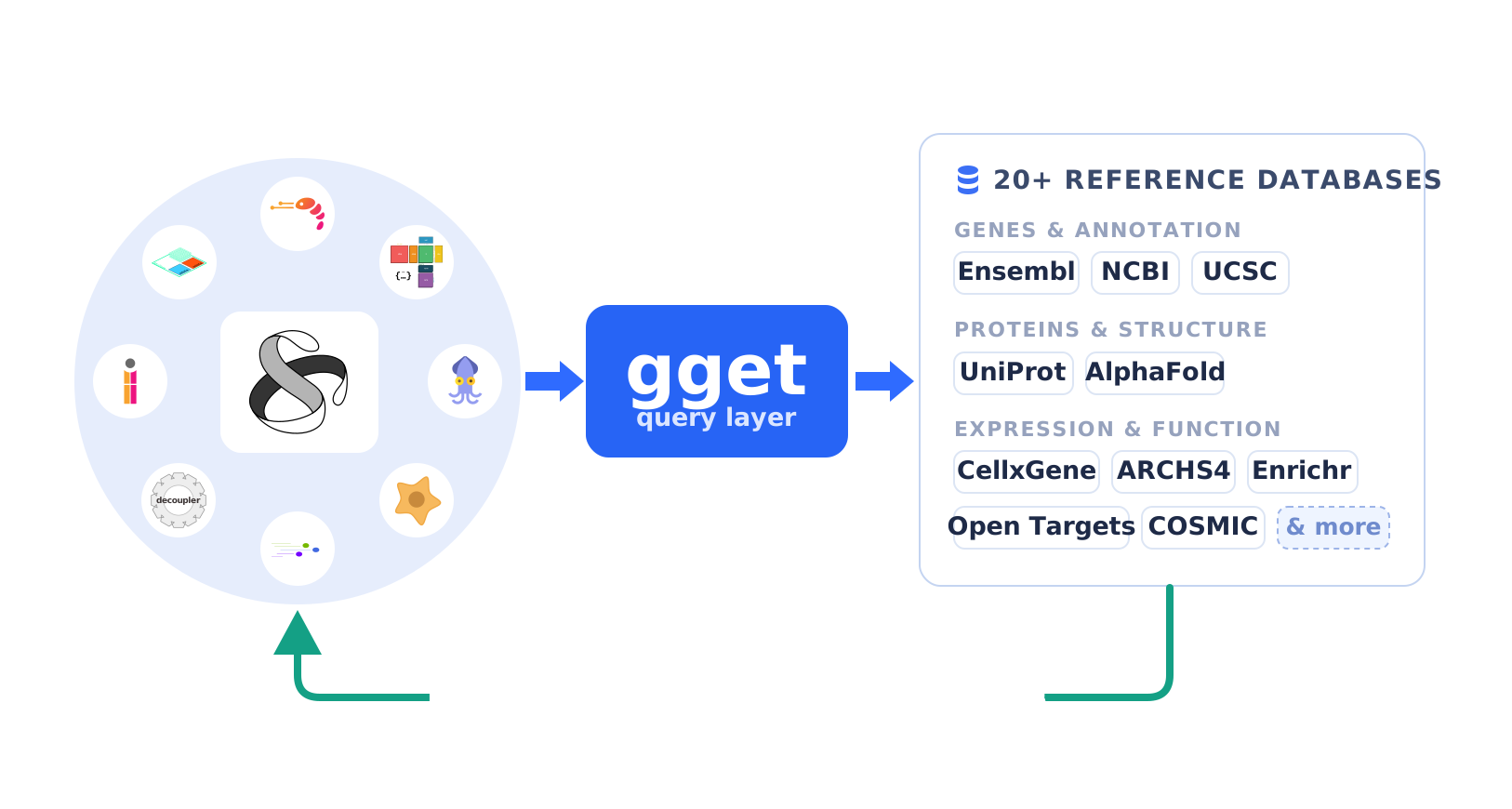
What is gget?
gget is a Python package and command-line tool for programmatic access to biological databases. It was published in Bioinformatics in 2023 from the Pachter Lab at Caltech, and provides a unified interface to more than 20 reference databases such as Ensembl, UniProt, NCBI, UCSC, AlphaFold, and more through a consistent API.
gget enables biological interpretation within scverse workflows
Analyses built on scverse tools can be the starting point for biological interpretation. For example, after clustering with Scanpy and identifying marker genes, you might want to understand what those genes do, how they are expressed across tissues, whether they are associated with disease, and how their protein products are structured. Without tooling answering these questions means leaving Python and visiting several web portals.
gget closes that loop and is designed for exactly the questions arising at the end of a scverse analysis. It returns results in formats that fit back into the analysis environment.
import scanpy as sc
import gget

# Load and process single-cell data
adata = sc.read_h5ad("my_data.h5ad")

sc.pp.normalize_total(adata)
sc.pp.log1p(adata)
sc.tl.rank_genes_groups(adata, groupby="cell_type")

# Pull the top marker genes for a cluster
markers = sc.get.rank_genes_groups_df(adata, group="T cells")["names"].tolist()[:20]

# gget.info() requires Ensembl IDs
# Use gget.search() to resolve symbols to IDs first
search_results = gget.search(markers, "homo_sapiens")
ensembl_ids = search_results["ensembl_id"].tolist()
gget.info(ensembl_ids)

# Run enrichment
gget.enrichr(markers, database="GO_Biological_Process_2023")

# Fetch expression across human tissues from ARCHS4
gget.archs4(markers[0], which="tissue")
The gget.cellxgene module returns data as AnnData objects helping slot results directly into scverse pipelines:
# gget.cellxgene needs a one-time setup to install the cellxgene-census backend
gget.setup("cellxgene")

# Query CellxGene for pancreatic data and get back an AnnData object
adata = gget.cellxgene(
    tissue="pancreas",
    cell_type="pancreatic ductal cell",
    gene=["INS", "GCG", "SST"],
    census_version="stable"
)

# Inspect the returned AnnData object
adata
Output (stable → 2025-11-08 release):
AnnData object with n_obs × n_vars = 29010 × 3
    obs: 'dataset_id', 'assay', 'suspension_type', 'sex', 'tissue_general', 'tissue', 'cell_type', 'disease', 'is_primary_data'
    var: 'soma_joinid', 'feature_id', 'feature_name', 'feature_type', 'feature_length', 'nnz', 'n_measured_obs'
Alignment with the scverse mission
scverse is a modular, open, and interoperable foundation for biology. Individual packages focus on what they do best, use shared data structures, and compose naturally with one another. The addition of gget to our ecosystem complements our existing tooling by interoperating with the most widely used metadata & dataset databases.
Someone studying spatial transcriptomics with Squidpy may want to fetch ligand-receptor protein structures from PDB, or pull disease associations from Open Targets, or BLAST a sequence of interest. The integration of gget makes each of those a one-liner by being the layer helping you handle external reference databases alongside those analyses.
What joining the scverse ecosystem means
For gget, joining scverse means adopting shared community infrastructure: the scverse package template, continuous integration conventions, as well as the documentation and testing practices the ecosystem shares. It also means participating in the same community spaces where the broader ecosystem is discussed and developed.
For users, it means gget is where you would expect to find it: listed as one of our ecosystem packages at scverse.org/packages, discussed in the scverse Zulip and Discourse, and maintained with the same expectations of quality and openness that apply across the ecosystem.
Get started
gget is available on PyPI:
pip install gget
The documentation covers all modules with worked examples. The GitHub repository is the best place to report issues, propose new database integrations, or contribute.
If you are new to the scverse ecosystem, scverse.org/join is the place to start. We’re excited to see what the community builds together.
— the scverse team.